


In a world that is increasingly aware of environmental impact, the chemical industry is undergoing a transformation towards more sustainable and safer solutions. APEO-free surfactants (Alkylphenol Ethoxylates) represent a significant advance in this direction, offering remarkable benefits for both the environment and human health.
What are APEO-Free Surfactants?
In the chemical industry, the term APEO-free chemical is commonly used to describe formulations and surfactants that are produced without alkylphenol ethoxylates.
APEO-free surfactants are surfactants that do not contain alkylphenol ethoxylates (APEOs). These surfactants are designed to provide similar or superior performance to traditional APEO-based surfactants, but with significantly reduced environmental impact and health risks.
Why Avoid APEOs?
APEOs, such as Nonylphenol Ethoxylates (NPEs) and Octylphenol Ethoxylates (OPEs), have been widely used in industrial and consumer products, but they present significant risks:
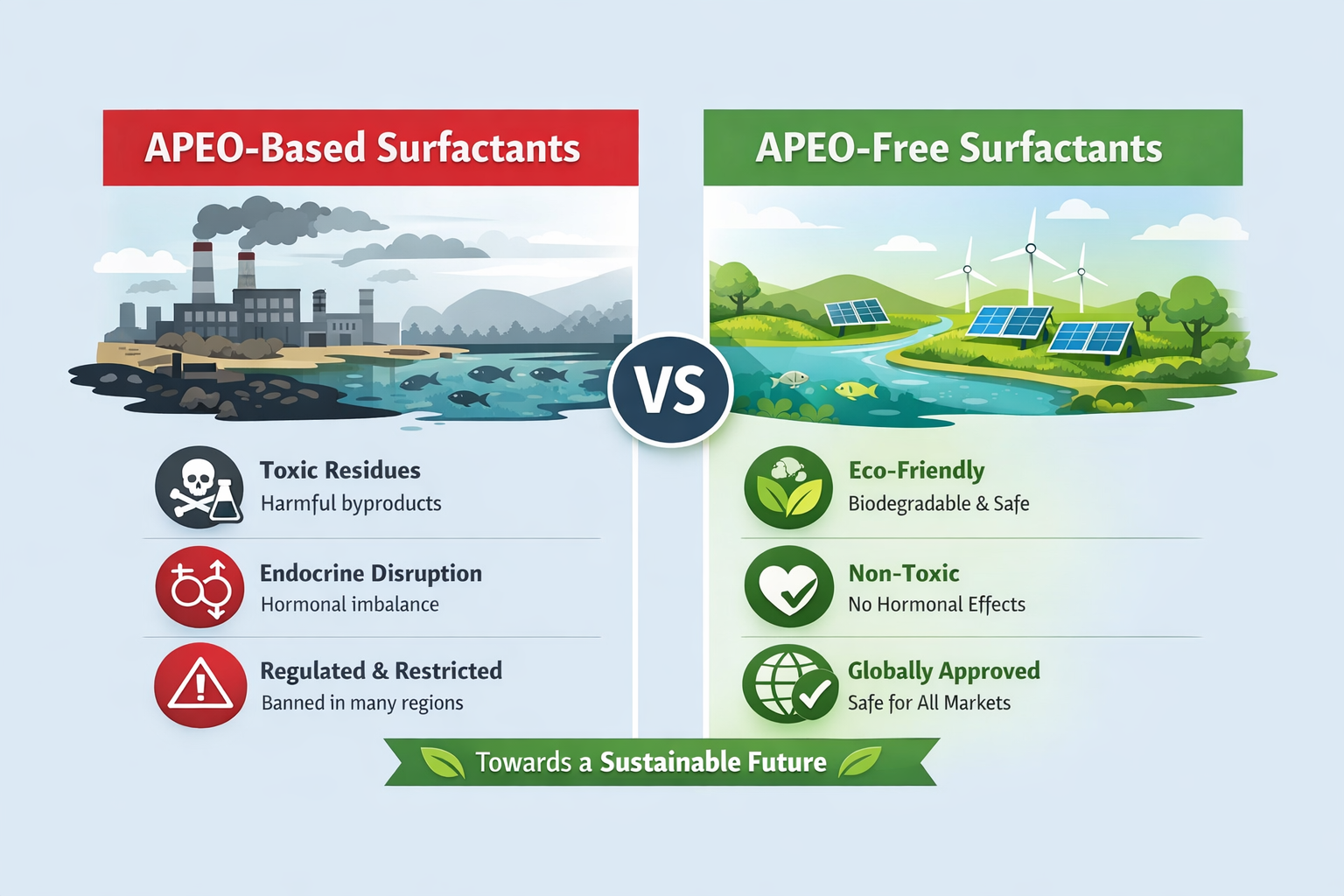
- Environmental Impact: APEOs degrade into alkylphenols, which are persistent, bioaccumulative and toxic to aquatic life.
- Endocrine Disruption: Some breakdown products (e.g., nonylphenol) mimic estrogen, leading to hormonal imbalances in wildlife and humans.
- Regulatory Restrictions: Many regions (EU, US, China) have restricted or banned APEOs on detergents, paints, and textiles due to their toxicity.
Key Differences Between APEO Surfactants and APEO Free
Feature | APEO-based surfactants | APEO-Free Surfactants |
Chemical Composition | Alkylphenol Ethoxylates (e.g., Nonylphenol Ethoxylates, Octylphenol Ethoxylates) | Alternative ethoxylates (e.g., ethoxylated alcohol, glycosides, sulfates) |
Biodegradability | Low, leads to persistent pollutants | Typically better, faster decomposition in nature |
Toxicity | May form toxic nonylphenol residues | Generally lower toxicity and safer for aquatic life |
Endocrine disruption | Yes, it can interfere with hormonal systems | No known endocrine disruption |
Regulatory Status | Restricted or banned in many regions | Approved for global use |
Yield | Effective but with concerns | Modern free versions of APEO match or exceed performance |
Common APEO-Free Surfactant Chemistries
APEO-free surfactants come in different chemical classes, each with unique properties:
Ethoxylated Alcohol (AEs):
- Chemistry: Fatty alcohol + ethylene oxide.
- Key features: Good detergency, wetting and emulsification.
- Common Uses: Industrial cleaning, textiles, coatings.
Alkyl Polyglycosides (APGs):
- Chemical: Sugar derivatives (glucose-based).
- Key Features: Soft, biodegradable, low toxicity.
- Common uses: Personal care, household cleaners, agrochemicals.
Sodium Lauryl Sulfate (SLS) and Sodium Laureth Sulfate (SLES):
- Chemistry: Sulphated ethoxylate alcohol.
- Key Features: High foaming, good cleanliness, anionics.
- Common Uses: Shampoos, detergents, cosmetics.
Sorbitan Esters (Spans) and Polysorbates (Tweens):
- Chemistry: Esters based on sorbitol.
- Key features: Emulsifiers, good solubilization.
- Common Uses: Food, pharmaceuticals, cosmetics.
Etoxilatos de Metil Éster (MEE):
- Chemistry: Methyl fatty acid esters + ethoxylation.
- Key features: Good wetting, detergency, low toxicity.
- Common uses: Agrochemicals, detergents, emulsifiers.
APEO-Free Surfactant Applications
Due to growing environmental concerns, APEO-free surfactants are replacing traditional APEOs in various industries:
- Textiles: Dyeing, washing, wetting and dispersing agents.
- Paints and Coatings: Emulsifiers for latex paints and coatings.
- Detergents and Cleaners: Industrial, institutional and domestic cleaning agents.
- Personal Care: Shampoos, soaps and skin care formulations.
- Agrochemicals: Wetting and dispersing agents in pesticides.
Conclusion
APEO-free surfactants are environmentally friendly alternatives to traditional APEO-based surfactants. They offer comparable or superior performance while addressing regulatory and health concerns. As industries move toward sustainable solutions, APEO-free surfactants are becoming the preferred choice in various applications.
As the shift toward safer surfactant technologies continues, companies such as SBR International GmbH support this transition by offering APEO-free surfactant solutions aligned with regulatory and environmental expectations
Join the green revolution! Choose APEO-free surfactants and contribute to a more sustainable future.