

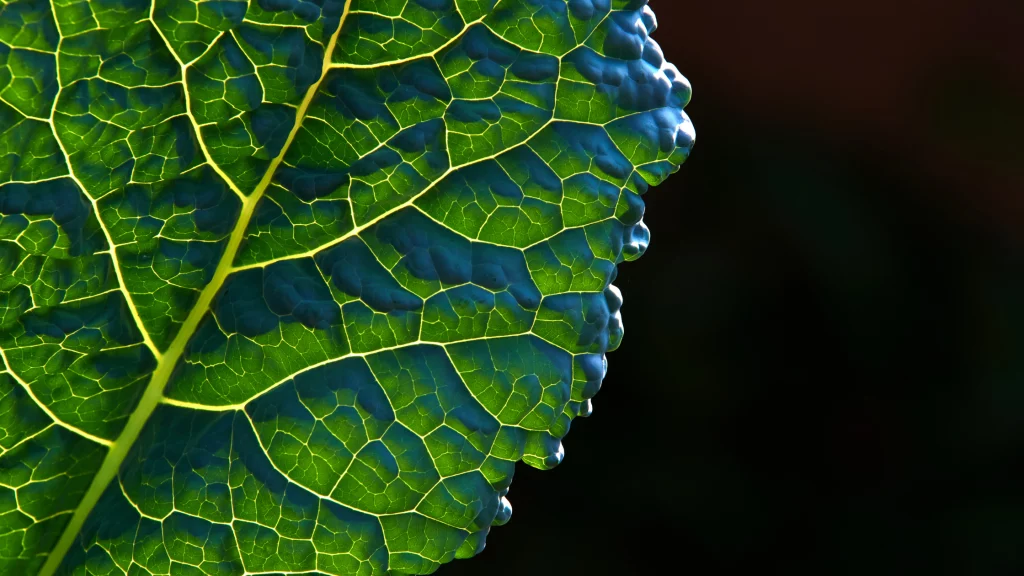
Introduction: More than science, a strategy for the future
When we hear the word photosynthesis, we often think of green leaves and rays of sunlight. Yet behind that simple image lies the process that sustains agriculture, the food industry, and the nutritional security of millions of people. Understanding how its two phases work- the light-dependent reactions and the light-independent reactions is not just an academic matter: it is a strategic tool for those working in agrochemical formulations, agricultural production, and sustainable development.
At SBR International GmbH, we know that chemistry accompanies biology. That is why talking about photosynthesis also means talking about innovation in surfactants, adjuvants, and smart formulations that maximize the efficiency of this natural process.
1. The First Phase: Light-Dependent Reactions
Photosynthesis begins with the light phase, which takes place in the chloroplasts of plant cells.
- What happens: solar energy is captured by chlorophyll and other pigments. That energy is transformed into energy molecules: ATP (adenosine triphosphate) and NADPH (nicotinamide adenine dinucleotide phosphate reduced).
- Why it matters: without this phase, plants would not have the “charged battery” needed to produce glucose.
- Close analogy: imagine the plant has an internal power station. Light is the fuel that turns on the generators and produces the energy required for the factory to run.
Application in the Agro Industry
In high-tech crops, light management is essential. Modern greenhouses use LEDs with specific spectra to optimize this phase, increasing photosynthetic efficiency and, therefore, agricultural productivity.
This is where the formulations of SBR International GmbH come into play: surfactants and adjuvants that ensure nutrients and agrochemicals are distributed evenly across leaves, maximizing absorption precisely when the plant is “charging its battery” with light.
2. The Second Phase: Light-Independent Reactions (Calvin Cycle)
Once the plant has stored energy, the dark phase or Calvin Cycle begins.
- What happens: using the ATP and NADPH generated earlier, the plant fixes carbon dioxide (CO₂) and converts it into glucose.
- Why it matters: this is where real food is produced—the foundation of the food chain.
- Close analogy: if the first phase is the power station, the second is the production line that manufactures the final product: glucose, which is later transformed into starch, cellulose, and other vital compounds.
Application in the Agro-Food Industry
The availability of CO₂ and the stability of chemical conditions are critical. In agribusiness, smart formulations are developed to improve nutrient absorption and optimize this cycle.
At SBR International GmbH, we work on solutions that make chemical actives more efficient and compatible with smart application systems (drones, precision sprayers). In this way, chemistry accompanies the natural cycle of photosynthesis to ensure higher and more sustainable yields.
3. Photosynthesis and the Agro-Food Industry
Photosynthesis is not just a biological process: it is the link that connects solar energy with global food security.
- Agricultural production: every improvement in photosynthetic efficiency translates into higher yield per hectare.
- Chemical formulations: surfactants such as SOPROPHOR FL and UNITOP FL allow agrochemicals to spread more effectively across leaves, maximizing absorption during photosynthesis.
- Impact on consumers: greater productivity means more accessible and sustainable food for a growing population.
4. The Impact on Population and Consumers
Photosynthesis is the bridge between sunlight and the plate of food for millions of people.
- Food security: without efficient photosynthesis, there is not enough production to supply the global population.
- Agrochemical innovation: companies like SBR International GmbH work on formulations that accompany this natural process, ensuring that every molecule applied has a positive impact on yield.
- Sustainability: optimizing photosynthesis means reducing pressure on natural resources, guaranteeing food for future generations.
“Without light, there is no photosynthesis. Without photosynthesis, there is no food. Without food… there is no life.”
Conclusion
Photosynthesis is the primary biological process that supports agriculture. Understanding its phases allows the development of improved agrochemical strategies and formulation approaches. SBR International GmbH creates surfactants and adjuvants that complement plant physiology, enabling higher efficiency, improved stability and sustainable yields.
By combining applied chemistry with biological insight, we support food production systems and strengthen our commitment to innovation, precision and long term agricultural advancement.
Looking to Improve Crop Performance?
Request SBR International’s Agro Surfactant Solutions for better spreading, penetration, and tank-mix compatibility at info@sbr-int.com